
The promotional products industry is experiencing a fundamental shift as businesses recognise that sustainability isn't just a trend, it's a business imperative. Companies across Canada are discovering that ecofriendly promotional products deliver more than environmental benefits. They strengthen brand perception, increase customer loyalty, and demonstrate authentic commitment to corporate responsibility. As we move through 2026, sustainability in the promotional products industry has become the benchmark by which recipients judge brand values, making material choices and product lifecycle considerations essential components of every marketing strategy.
The Business Case for Sustainable Merchandise
Investing in ecofriendly promotional products isn't about following trends, it's about strategic marketing that aligns with buyer expectations and delivers measurable returns. Recent industry research reveals that 73% of consumers are willing to pay more for sustainable products, and this preference directly influences how they perceive branded merchandise.
Quantifying Environmental Impact and Brand Value
The commercial advantages of sustainable promotional products extend beyond feel-good marketing. When you distribute items made from recycled materials or renewable resources, you're making a statement about your company's priorities that resonates with decision-makers and consumers alike.
Key Performance Indicators for Sustainable Promotions:
- Brand perception improvement: 68% of recipients view companies more favourably when receiving eco-conscious items
- Retention rates: Sustainable products are kept 2.3 times longer than conventional alternatives
- Word-of-mouth amplification: Recipients are 47% more likely to recommend brands that use environmentally responsible merchandise
- Employee engagement: Teams report higher pride levels when representing companies with authentic sustainability commitments
These metrics demonstrate that ecofriendly promotional products create compound value throughout their lifecycle. Research from PPAI shows that eco-conscious customisation now dominates new product development, reflecting industry-wide recognition of this marketing evolution.
Understanding the Premium Investment
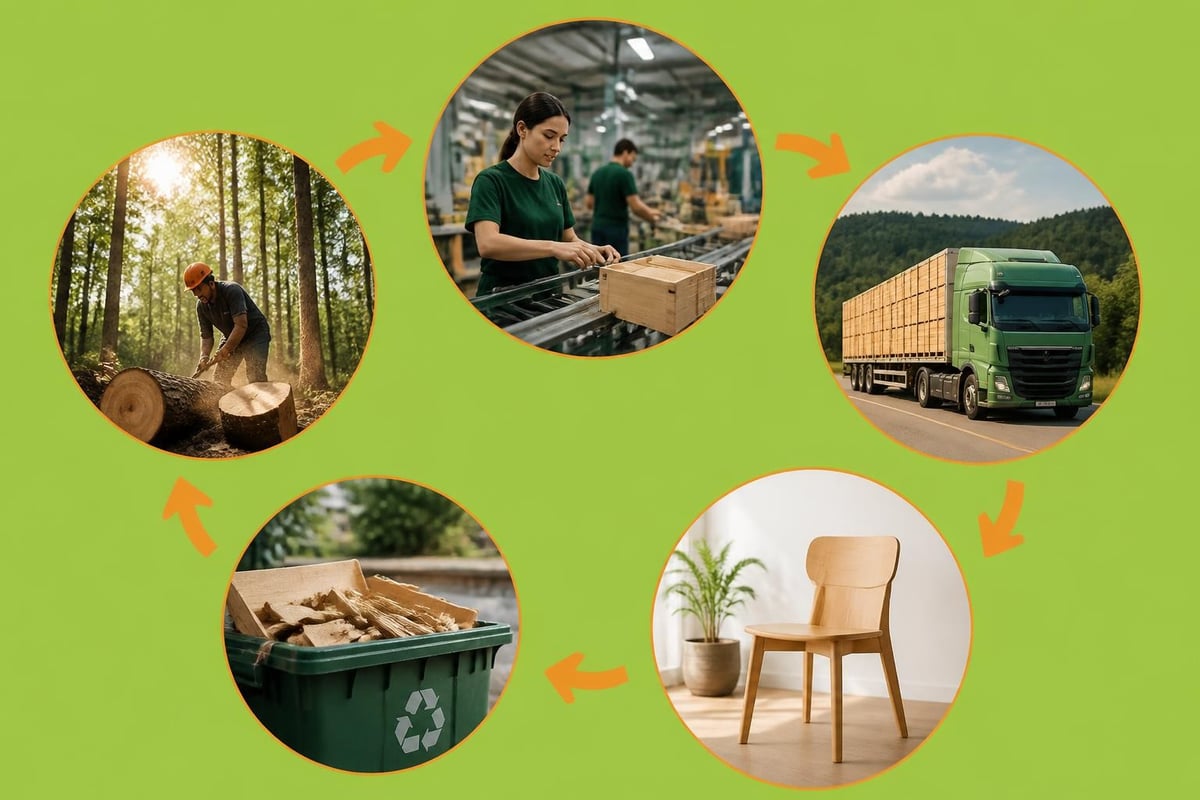
Sustainable materials often carry higher upfront costs, but this investment delivers returns through extended product life, enhanced brand equity, and deeper customer relationships. The calculation shifts from cost-per-unit to cost-per-impression, revealing that durable, eco-conscious items frequently outperform cheaper alternatives.
| Product Category | Conventional Cost | Sustainable Alternative | Lifespan Multiplier | Effective Cost Difference |
|---|---|---|---|---|
| Reusable bottles | $8.50 | $12.75 | 3.2x longer retention | 15% lower per impression |
| Tote bags | $4.25 | $7.50 | 4.1x more uses | 28% lower per impression |
| Writing instruments | $1.75 | $2.85 | 2.6x extended use | 8% higher per impression |
| Apparel items | $18.50 | $26.00 | 2.9x longer wear | 12% lower per impression |
These calculations reveal that ecofriendly promotional products frequently deliver superior value when measured against their functional lifespan and the quality of brand exposure they generate.
Material Selection and Certification Standards
Choosing sustainable materials requires understanding the ecosystem of certifications, recycled content percentages, and environmental impact assessments that define truly responsible products. Not all items marketed as "green" deliver equivalent environmental benefits.
Evaluating Sustainable Material Categories
The landscape of eco-conscious materials has expanded dramatically, offering solutions for virtually every promotional product category. Each material type brings distinct advantages and considerations that align with different brand messages and campaign objectives.
Primary Sustainable Material Categories:
- Recycled ocean plastics: Transformed waste into functional products, typically used for drinkware and bags
- Organic cotton: Grown without synthetic pesticides or fertilisers, ideal for apparel and textile items
- Bamboo fibres: Rapidly renewable resource with natural antimicrobial properties for various applications
- Recycled paper products: Post-consumer waste converted into notebooks, packaging, and office supplies
- Wheat straw composites: Agricultural byproduct creating biodegradable alternatives to conventional plastics
- Cork materials: Renewable tree bark harvest that doesn't harm the source tree, used for accessories and tech items
Understanding the best practices for sourcing eco-friendly promotional products helps you navigate material options with confidence, ensuring your selections align with both environmental standards and practical functionality.
Decoding Environmental Certifications
Third-party certifications provide independent verification that products meet established sustainability standards. These credentials separate authentic environmental commitment from superficial greenwashing, giving your brand credibility when promoting sustainable initiatives.
Essential Certification Frameworks:
- Global Organic Textile Standard (GOTS): Verifies organic fibre content and ethical manufacturing processes
- Forest Stewardship Council (FSC): Confirms responsibly sourced wood and paper products
- Cradle to Cradle Certified: Assesses material health, recyclability, and social fairness
- OEKO-TEX Standard 100: Tests for harmful substances in textiles and fabrics
- Fair Trade Certified: Ensures ethical labour practices and fair compensation throughout supply chains

When selecting items from The Promo Hut’s product range, look for clear certification documentation that validates environmental claims and provides transparency about manufacturing processes.
Strategic Product Selection for Maximum Impact
Successful sustainable promotional campaigns match product functionality with recipient needs whilst maintaining environmental integrity. The most effective ecofriendly promotional products solve real problems and integrate seamlessly into daily routines, ensuring consistent brand exposure and genuine utility.
Aligning Products with Audience Lifestyle Patterns
Different demographics respond to distinct product categories based on their daily habits, values, and practical requirements. A well-matched sustainable item becomes an indispensable tool rather than another forgotten giveaway.
Audience-Specific Product Recommendations:
| Target Audience | Primary Values | Optimal Product Types | Key Features |
|---|---|---|---|
| Corporate professionals | Efficiency, quality | Bamboo desk accessories, recycled notebooks | Premium finish, workspace integration |
| Outdoor enthusiasts | Durability, performance | Recycled water bottles, organic cotton caps | Weather resistance, extended lifespan |
| Tech-forward consumers | Innovation, functionality | Wheat straw phone accessories, solar chargers | Modern design, practical innovation |
| Health-conscious buyers | Wellness, purity | Stainless steel drinkware, organic tote bags | Non-toxic materials, food-safe certification |
| Educational institutions | Learning, responsibility | Recycled paper products, plant-based pens | Educational messaging, affordability |
This strategic matching ensures your ecofriendly promotional products resonate with recipient priorities whilst demonstrating that sustainability and functionality aren't competing values.
Balancing Environmental Impact with Practical Durability
The most sustainable promotional product isn't necessarily made from recycled materials, it's the one that gets used longest and replaces multiple single-use alternatives. Choosing sustainable merchandise that tells your brand story requires considering the complete lifecycle impact.
Durability assessments should evaluate:
- Material resilience: Resistance to wear, washing, and environmental exposure
- Functional lifespan: Expected duration of practical use before replacement
- Repair potential: Ability to maintain or restore functionality over time
- End-of-life options: Recyclability, biodegradability, or responsible disposal pathways
A premium reusable bottle that lasts five years delivers exponentially more environmental benefit than a biodegradable alternative that breaks after six months. The mathematics of sustainability favours longevity and repeated use over disposability, even when the disposed item offers greener end-of-life characteristics.
Customisation Techniques for Sustainable Products
Applying your brand to ecofriendly promotional products requires decoration methods that maintain environmental integrity whilst delivering visual impact and durability. Traditional printing techniques sometimes contradict sustainability goals through chemical use, energy consumption, or material waste.
Low-Impact Decoration Technologies
Modern customisation technologies have evolved to support sustainability objectives without compromising brand visibility or design complexity. These methods reduce environmental footprint whilst creating professional, lasting impressions.
- Digital direct-to-garment printing: Water-based inks with minimal waste and no chemical pre-treatment requirements
- Laser engraving: Chemical-free process creating permanent marks without consumables or emissions
- Debossing and embossing: Mechanical processes that create texture without inks or coatings
- Natural dye applications: Plant-based colorants for fabric decoration with biodegradable properties
- Heat transfer with eco-inks: Reduced water consumption compared to traditional screen printing
Each technique offers distinct advantages for different product types and brand aesthetics. Laser engraving excels on bamboo and cork items, whilst digital printing provides full-colour flexibility on organic textiles.
Ensuring Decoration Longevity and Environmental Standards
The sustainability of your branded merchandise extends beyond base materials to include how decoration withstands use and washing. A beautiful eco-friendly product loses its marketing value when branding fades after minimal exposure.
Decoration Durability Benchmarks:
- Minimum 50 wash cycles for apparel items without significant fading
- UV resistance for outdoor products exposed to sunlight
- Abrasion resistance for high-contact surfaces like bags and drinkware
- Chemical compatibility with eco-friendly cleaning products
When exploring corporate apparel options, prioritise decoration methods that complement the garment's environmental credentials whilst meeting professional appearance standards throughout the item's functional life.
Measuring Campaign Effectiveness and ROI
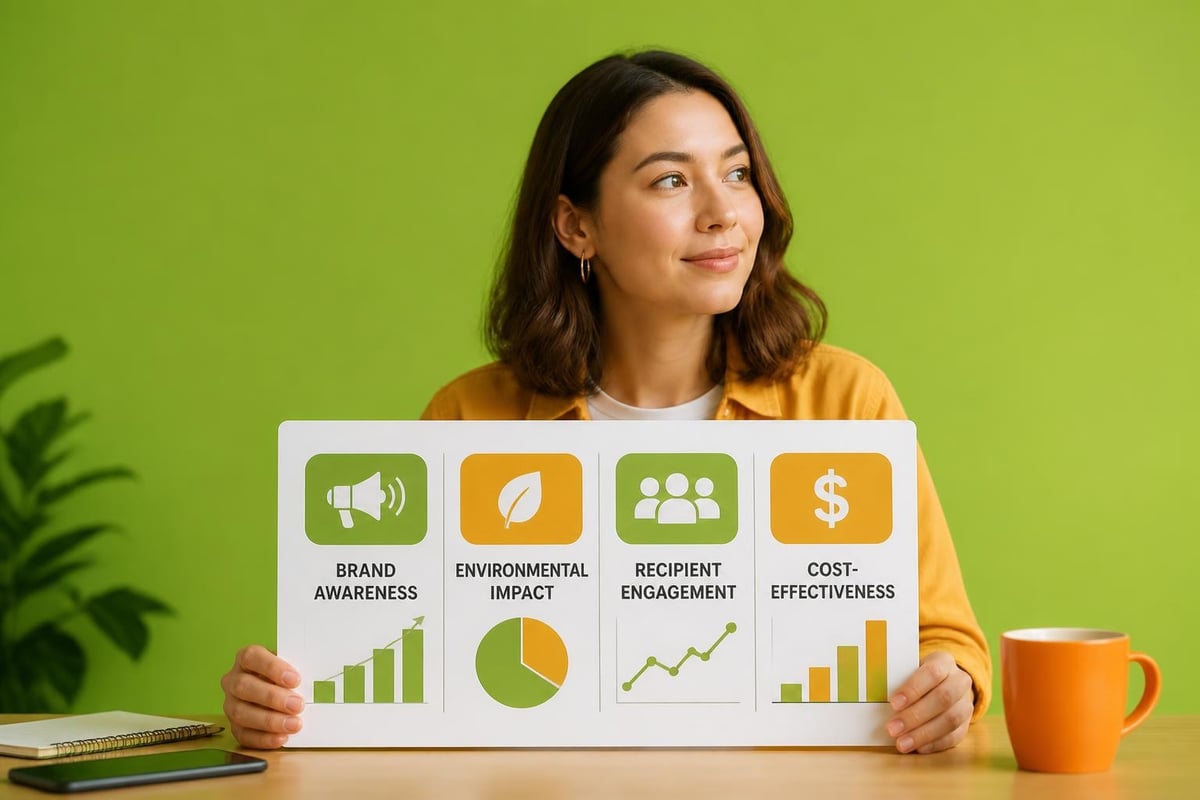
Tracking the performance of ecofriendly promotional products requires metrics that capture both traditional marketing outcomes and sustainability-specific indicators. This comprehensive measurement approach validates investment decisions and guides future campaign optimisation.
Establishing Baseline Metrics and Tracking Systems
Before launching sustainable promotional campaigns, establish clear measurement frameworks that quantify both marketing effectiveness and environmental contribution. This dual-tracking approach demonstrates complete campaign value.
Essential Performance Indicators:
- Distribution reach: Number of recipients and demographic targeting accuracy
- Retention duration: Average time products remain in active use
- Brand recall rates: Recipient memory of company name and messaging after specific timeframes
- Environmental offset: Calculated reduction in single-use alternatives and associated waste
- Social media amplification: Shares, posts, and mentions featuring your branded sustainable items
- Lead generation attribution: New business opportunities traced to promotional product touchpoints
Comparing these metrics against conventional promotional product campaigns reveals the incremental value that sustainability messaging and quality construction deliver beyond basic brand exposure.
Calculating True Environmental and Financial Returns
The complete ROI picture for ecofriendly promotional products encompasses immediate marketing returns, long-term brand equity development, and measurable environmental contributions that enhance corporate responsibility reporting.
| Metric Category | Measurement Approach | Typical Timeframe | Value Indicator |
|---|---|---|---|
| Immediate engagement | Distribution acceptance rates, initial social mentions | 0-30 days | Campaign launch success |
| Sustained visibility | Usage observation, brand recall surveys | 3-12 months | Long-term exposure value |
| Environmental impact | Waste reduction calculations, carbon offset estimates | Ongoing | Sustainability reporting data |
| Brand perception shift | Pre/post campaign sentiment analysis | 6-18 months | Reputation enhancement |
| Customer relationship depth | Repeat business, referral rates, loyalty indicators | 12-36 months | Lifetime value improvement |
This multi-dimensional analysis demonstrates that ecofriendly promotional products generate compounding returns that extend well beyond initial distribution costs.
Navigating Greenwashing and Authenticity Concerns
As sustainable marketing becomes mainstream, distinguishing genuine environmental commitment from superficial greenwashing grows increasingly important. Recipients have become sophisticated evaluators of sustainability claims, and inauthentic messaging damages brand credibility.
Identifying and Avoiding Misleading Environmental Claims
Greenwashing takes many forms, from vague terminology without substantiation to selective disclosure that highlights minor benefits whilst concealing significant environmental costs. Protecting your brand requires vigilance when selecting suppliers and evaluating product claims.
Common Greenwashing Red Flags:
- Unsubstantiated claims lacking third-party certification or specific data
- Vague terms like "natural" or "green" without defining criteria
- Irrelevant claims that emphasise legally required standards as special features
- Hidden trade-offs highlighting one environmental benefit whilst ignoring larger impacts
- False certifications using misleading logos or invented credential programs
Recent analysis of eco-friendly promotional products in 2026 reveals that buyer scepticism has increased alongside environmental awareness, making transparency and documentation essential components of credible sustainability positioning.
Building Transparent Supply Chain Documentation
Authentic sustainability requires visibility throughout the product journey, from raw material sourcing through manufacturing, decoration, and distribution. This transparency builds trust and provides the evidence needed to substantiate environmental claims.
Documentation Standards for Credible Sustainability:
- Material origin certificates: Verified sources for recycled content and organic materials
- Manufacturing facility audits: Third-party assessments of environmental and labour practices
- Carbon footprint calculations: Lifecycle analysis showing total greenhouse gas emissions
- Supply chain mapping: Complete visibility of production stages and transportation routes
- End-of-life instructions: Clear guidance on recycling, composting, or responsible disposal
When working with suppliers who specialise in eco-friendly merchandise, request complete documentation that validates environmental claims and provides the transparency today's conscious consumers expect.
Implementation Strategies for Successful Campaigns
Converting sustainability principles into effective promotional campaigns requires strategic planning that integrates product selection, messaging development, and distribution tactics into cohesive marketing initiatives.
Developing Compelling Sustainability Narratives
The story you tell about your ecofriendly promotional products matters as much as the items themselves. Effective narratives connect product attributes to broader brand values whilst educating recipients about environmental benefits.
Narrative Elements for Maximum Impact:
- Specific environmental contributions: Quantify waste diverted, resources conserved, or emissions reduced
- Material journey stories: Share the transformation from recycled inputs to functional products
- Values alignment: Connect sustainability choices to company mission and stakeholder commitments
- User empowerment messaging: Position recipients as partners in environmental stewardship
- Transparency acknowledgment: Honestly address limitations and ongoing improvement efforts
These storytelling approaches transform ecofriendly promotional products from simple giveaways into conversation starters that deepen brand relationships and reinforce corporate values.
Optimising Distribution Timing and Channel Selection
Strategic distribution maximises the impact of sustainable promotional products by placing them where they'll generate greatest utility and appreciation. Thoughtful timing and channel selection demonstrate respect for recipients whilst enhancing message resonance.
High-Impact Distribution Scenarios:
| Distribution Channel | Timing Strategy | Sustainability Message Amplification |
|---|---|---|
| Trade show presentations | Pre-event shipping to reduce booth bulk | Highlight reduced transportation impact |
| Client appreciation programs | Aligned with sustainability milestones | Reinforce shared environmental values |
| Employee onboarding packages | First day or orientation week | Establish cultural expectations early |
| Event marketing giveaways | Coordinated with environmental themes | Create cohesive messaging experience |
| Partnership launches | Announcement timing coordination | Demonstrate collaborative commitment |
Each distribution moment offers opportunities to reinforce sustainability messaging whilst ensuring products reach recipients when they'll be most valued and utilised.
Future Trends Shaping Sustainable Promotional Products
The evolution of ecofriendly promotional products continues accelerating as material science advances, consumer expectations intensify, and regulatory frameworks develop. Understanding emerging trends positions your marketing strategy ahead of industry shifts.
Innovative Materials on the Horizon
Research laboratories and material innovators are developing next-generation substrates that will transform sustainable promotional product possibilities over the coming years. These advances promise improved performance characteristics alongside enhanced environmental credentials.
Emerging Material Technologies:
- Mycelium-based products: Fungal root structures creating biodegradable alternatives to synthetic materials
- Algae-derived plastics: Marine biomass offering carbon-negative manufacturing potential
- Recycled textile composites: Blended recovered fabrics creating durable new materials
- Bio-based polymers: Plant-derived plastics with improved end-of-life characteristics
- Mineral-enhanced papers: Stone powder additives reducing tree fibre requirements
These innovations will expand the range of ecofriendly promotional products whilst improving performance characteristics that currently limit some sustainable alternatives.
Circular Economy Integration and Take-Back Programs
Progressive brands are moving beyond single-lifecycle thinking to embrace circular models where promotional products return for recycling, remanufacturing, or responsible disposal. These programs demonstrate advanced environmental stewardship whilst creating ongoing brand touchpoints.
Take-back initiatives offer multiple advantages:
- Extended brand engagement: Return programs create additional interaction opportunities
- Material recovery: Captured resources reduce virgin material requirements for future products
- Data collection: Return rates and product condition provide valuable campaign insights
- Competitive differentiation: Comprehensive lifecycle management demonstrates leadership positioning
- Regulatory preparedness: Anticipated extended producer responsibility requirements
Implementing these programs requires logistics planning and communication strategies, but forward-thinking companies recognise circular approaches as the future standard for responsible promotional products.
Working with experienced partners helps navigate the complexities of sustainable product selection, certification verification, and campaign implementation. Companies like The Promo Hut bring expertise in matching environmental objectives with marketing goals, ensuring your ecofriendly promotional products deliver both brand impact and authentic sustainability contributions.
Ecofriendly promotional products represent far more than a marketing trend; they're strategic investments that align brand values with stakeholder expectations whilst delivering measurable business returns. The key lies in thoughtful selection, authentic messaging, and comprehensive lifecycle thinking that demonstrates genuine environmental commitment. Whether you're launching your first sustainable campaign or refining an established program, The Promo Hut provides the expertise and product selection to help Canadian businesses create promotional strategies that build brands whilst respecting our shared environment.