Events offer businesses one of the most direct opportunities to connect with their target audience, whether at trade shows, conferences, product launches, or community gatherings. The right promotional products for events can transform a standard booth visit into a memorable brand experience that extends far beyond the event floor. When chosen strategically and distributed thoughtfully, branded merchandise creates tangible touchpoints that keep your company top-of-mind long after attendees return home. Research shows that promotional products generate significant brand recall and consumer engagement, making them essential tools in your event marketing arsenal.
Understanding the Strategic Value of Event Giveaways
Promotional products for events serve multiple functions that go far beyond simple freebies. They act as conversation starters, foot traffic drivers, and physical reminders of the connections made during your event interactions.
The psychology behind effective event merchandise is straightforward: people appreciate receiving something useful, and that positive emotion becomes associated with your brand. According to comprehensive market data on promotional product effectiveness, recipients keep promotional items for an average of over six months, creating thousands of impressions throughout that lifespan.
Key Benefits of Event-Specific Merchandise
- Increased booth traffic: Quality giveaways draw attendees to your space
- Enhanced brand recall: Physical items create lasting memory associations
- Extended marketing reach: Recipients become walking advertisements
- Lead generation support: Merchandise exchanges facilitate contact collection
- Social media amplification: Shareable products generate organic content
- Differentiation from competitors: Unique items set your brand apart
The 2023 PPAI consumer study on promotional products reveals that consumers have overwhelmingly positive attitudes toward companies that give them promotional products, with significant percentages reporting improved brand perception.
Choosing the Right Products for Your Event Type
Different events call for different approaches to promotional products for events. A corporate conference demands different merchandise than a summer music festival, and understanding these nuances separates successful campaigns from wasted budgets.
| Event Type | Ideal Products | Strategic Goal |
|---|---|---|
| Trade Shows | Tote bags, charging cables, notebooks | Utility during multi-day events |
| Conferences | Water bottles, lanyards, pens | Professional daily-use items |
| Outdoor Events | Sunglasses, hats, sunscreen packets | Immediate practical value |
| Product Launches | Premium branded items, tech accessories | Reflect product quality level |
| Community Events | Eco-friendly items, family-focused products | Broad demographic appeal |
Matching Products to Audience Demographics
Your promotional product selection should reflect the interests, needs, and lifestyles of your target attendees. Tech conference attendees appreciate wireless chargers and cable organizers, while wellness event participants value reusable water bottles and yoga mats.
Consider the professional context as well. C-suite executives attending exclusive networking events expect premium items like leather portfolios or high-end drinkware, while college career fairs call for budget-friendly but useful items like highlighters and stress balls.
When you select promotional items thoughtfully, you demonstrate that you understand your audience, which strengthens the overall brand message.
Budget-Smart Planning Strategies
Creating an effective promotional product budget requires balancing quantity against quality while factoring in often-overlooked expenses. The comprehensive checklist for ordering promotional products emphasizes starting with realistic budget expectations early in the planning process.
Smart budgeting begins with calculating your cost per attendee. Divide your total promotional budget by expected attendees to understand your per-person allocation. This framework helps you determine whether to invest in fewer premium items or larger quantities of standard merchandise.
Hidden Costs to Consider
- Setup and design fees: Logo customization often incurs one-time charges
- Rush production premiums: Last-minute orders cost significantly more
- Shipping expenses: Heavy items multiply freight costs quickly
- Storage requirements: Leftover inventory needs warehouse space
- Distribution labor: Staff time for booth setup and giveaway management
Many businesses discover that selecting quality promotional items over quantity creates better ROI. Recipients keep and use higher-quality products longer, generating more impressions per dollar invested.
Consider tiered giveaway strategies where you offer basic items to all attendees but reserve premium products for qualified leads or specific engagement activities. This approach maximizes budget efficiency while maintaining broad reach.
Strategic Distribution Methods That Drive Results
How you distribute promotional products for events matters as much as what you distribute. Best practices for distributing promotional products emphasize engagement over passive handouts.
Five Proven Distribution Techniques
Contest and game-based giveaways encourage participation while creating memorable interactions. Spin-the-wheel activities, social media challenges, or trivia competitions transform merchandise distribution into entertainment that draws crowds to your booth.
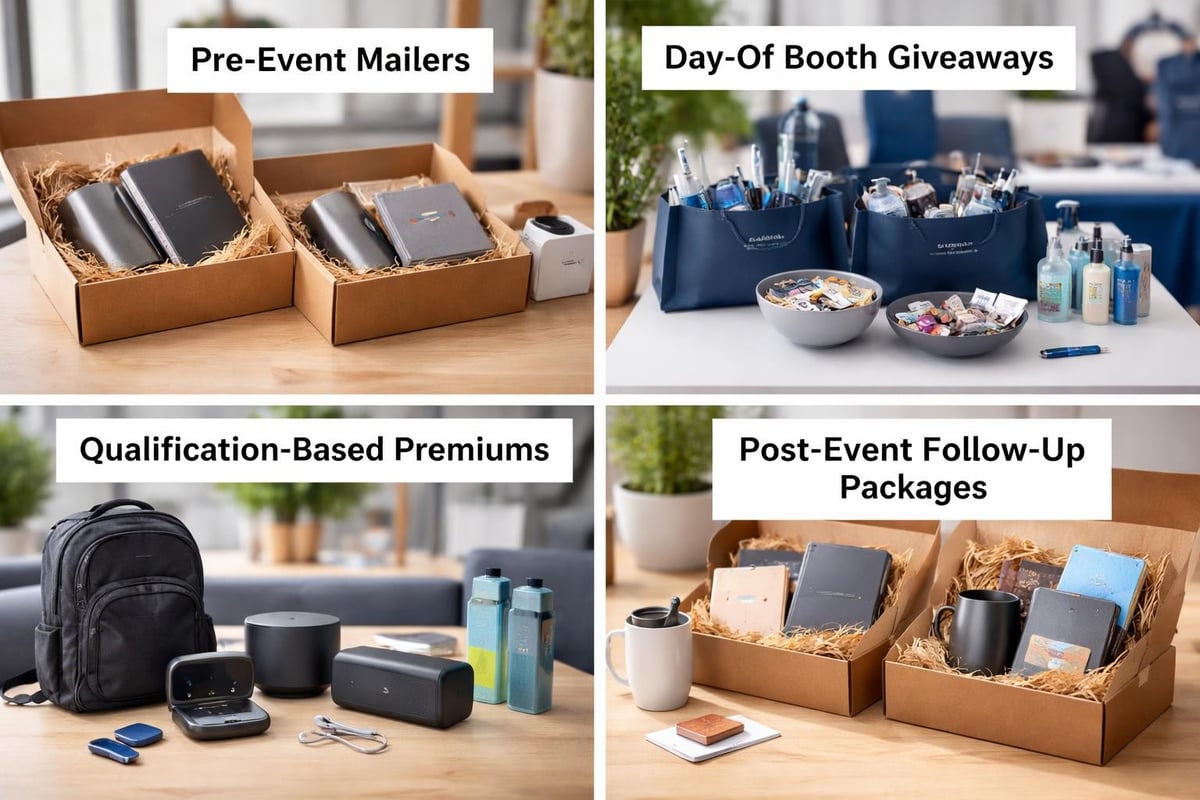
Qualification-based distribution ensures your premium items reach genuine prospects rather than professional swag collectors. Require business card exchanges, demo attendance, or contact form completion before distributing higher-value merchandise.
Time-based releases create urgency and repeat booth visits. Announce special giveaways at specific times throughout the event to maintain steady traffic flow and give attendees reasons to return.
Bundled product packages increase perceived value without proportionally increasing costs. Combining three smaller items in branded packaging feels more substantial than distributing them separately.
Post-event follow-up kits extend the event experience beyond the venue. According to strategic uses of promotional products at events, shipping merchandise after the event with personalized notes creates stronger connections than in-person distribution alone.
Creative Approaches That Amplify Brand Impact
Standing out at crowded events requires thinking beyond standard pens and stress balls. Creative promotional product strategies for trade shows demonstrate how innovative approaches multiply marketing effectiveness.
Event-specific customization makes generic products feel special. Adding the event name, date, or theme to your branded merchandise creates collectible items that attendees actually want to keep. Limited edition event versions of your standard promotional products generate excitement and perceived exclusivity.
Interactive product experiences transform passive giveaways into engaging activities. Custom temporary tattoos, DIY assembly kits, or personalization stations where attendees customize their own items create shareable moments that extend your reach through social media.
Eco-Friendly Options That Resonate
Sustainability has shifted from trend to expectation, particularly among younger professionals and environmentally conscious industries. Eco-friendly promotional products align your brand with values that increasingly influence purchasing decisions.
- Recycled material notebooks and bags
- Bamboo or wheat straw drinkware
- Seed paper that grows into plants
- Solar-powered charging devices
- Reusable food storage containers
Promotional products for events that emphasize sustainability communicate brand values while meeting practical attendee needs. These items often generate higher retention rates because recipients feel good about using and displaying them.
Measuring Success and ROI
Tracking promotional product effectiveness separates strategic marketers from those simply handing out swag. Establishing clear measurement frameworks before your event enables meaningful post-event analysis.
| Metric | Measurement Method | Success Indicator |
|---|---|---|
| Booth Traffic | Visitor count vs. giveaway inventory | Traffic increase during giveaway periods |
| Lead Quality | Sales conversion rate from event leads | Above-average close rates |
| Brand Recall | Post-event surveys | High unaided brand recognition |
| Social Engagement | Tagged posts and mentions | Organic content featuring products |
| Cost Per Acquisition | Total event cost ÷ qualified leads | Below average CPA for channel |
Digital integration amplifies measurement capabilities. QR codes on promotional products for events link to trackable landing pages, enabling precise attribution of website traffic and conversions. Unique discount codes exclusive to event merchandise recipients measure direct sales impact.
Social media monitoring reveals organic reach generated by shareable products. Search for event hashtags combined with your brand name to discover attendees posting photos of your merchandise, calculating earned media value from this user-generated content.
Post-Event Follow-Up Integration
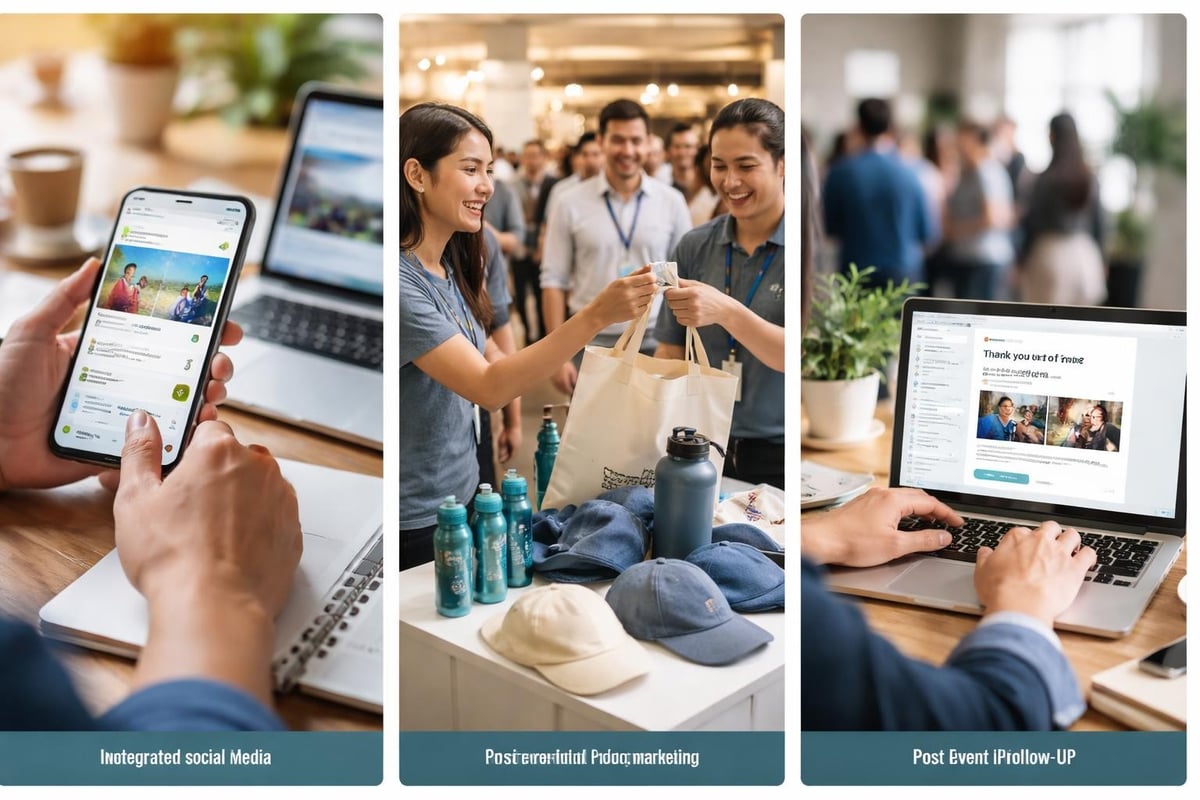
The most sophisticated event marketers view promotional products as the beginning of relationship building rather than the end. Coordinate your merchandise with post-event email campaigns that reference the specific items distributed.
For example: “We hope you’re enjoying the water bottle we gave you at the conference. Here’s how our software solves the hydration tracking challenge we discussed…” This approach creates continuity between the physical and digital touchpoints.
Pre-Event Promotional Strategies
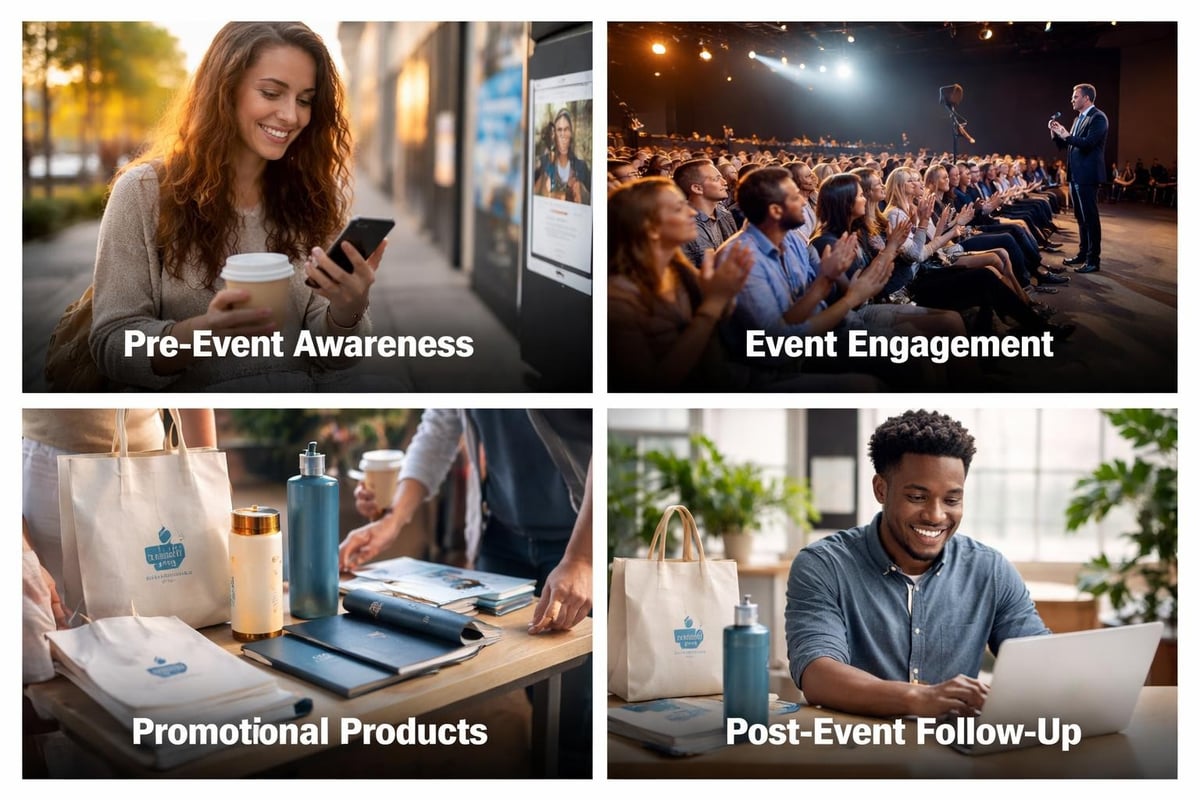
Smart use of promotional products for events begins before attendees ever enter the venue. Pre-event mailers to registered attendees build anticipation while ensuring your brand stands out from day one.
Preview packages containing small branded items with event schedules and booth location information increase the likelihood that recipients visit your space. When attendees arrive already carrying your branded tote or wearing your company t-shirt, you’ve achieved visibility before competitors even set up their booths.
Building Anticipation Through Social Media
Teaser campaigns showcasing the promotional products you’ll distribute generate buzz and drive booth traffic. Post photos of your giveaway items with captions like “Stop by booth 347 to grab one of these limited-edition charging cables” to create specific visit intentions.
Contests requiring social media engagement to win premium promotional items expand reach beyond event attendees. Followers who don’t attend the event still receive brand exposure, while winners become advocates sharing their prizes with their networks.
Product Categories That Consistently Perform
While creativity matters, certain promotional products for events have proven effectiveness across industries and event types. Understanding these reliable performers helps build successful merchandise strategies.
Drinkware remains the category king. Water bottles, coffee tumblers, and insulated cups combine high perceived value with consistent daily use. Recipients integrate quality drinkware into their routines, generating hundreds of impressions throughout the product’s lifespan.
Tech accessories address universal needs. Phone stands, cable organizers, screen cleaners, and portable chargers solve problems that nearly every professional faces. These items rarely get discarded because they serve genuine functions.
Apparel creates walking advertisements. High-quality corporate apparel turns recipients into brand ambassadors. T-shirts, hats, and lightweight jackets work particularly well when the design is attractive enough that people choose to wear them beyond the event itself.
Practical Office and Workspace Items
- Premium notebooks with durable covers
- Multi-function pens with stylus tips
- Desk organizers and phone stands
- Sticky note sets in brand colors
- High-quality lanyards and badge holders
The key differentiator is quality. Cheap versions of these products get tossed immediately, while well-made equivalents become daily-use items that recipients appreciate.
Industry-Specific Considerations
Different industries benefit from tailored approaches to promotional products for events. What works brilliantly at a healthcare conference might fall flat at a construction trade show.
Technology sector events call for innovative products that reflect cutting-edge brand positioning. Wireless charging pads, Bluetooth speakers, and smart device accessories align with audience expectations and interests.
Healthcare and wellness industries should emphasize cleanliness and health-conscious products. Antibacterial items, fitness accessories, and wellness-focused merchandise demonstrate industry awareness and values alignment.
Food and beverage events naturally pair with related promotional products. Branded cutting boards, recipe cards, specialty spice blends, or premium coffee samples create thematic consistency.
Professional services maintain credibility through sophisticated, understated merchandise. Leather portfolios, executive pens, and premium desk accessories communicate professionalism without appearing gimmicky.
For businesses looking to expand their event marketing strategies, understanding these industry nuances ensures promotional products enhance rather than detract from brand positioning.
Avoiding Common Event Merchandise Mistakes
Even experienced marketers make preventable errors when planning promotional products for events. Learning from these common pitfalls saves budget and maximizes impact.
Ordering insufficient quantities creates frustration and missed opportunities. Calculate expected attendance, add 20% buffer for unexpected traffic, then round up to take advantage of quantity pricing breaks. Running out of merchandise early signals poor planning.
Ignoring practical distribution logistics leaves you scrambling at the event. Consider how you’ll transport, store, and display hundreds or thousands of items. Collapsible storage bins, clear inventory organization, and adequate booth staff prevent distribution bottlenecks.
Choosing products without considering transportation saddles attendees with bulky or heavy items they can’t easily carry home. Trade show attendees traveling by air particularly appreciate compact, lightweight merchandise that fits in carry-on luggage.
Failing to quality-check samples results in discovering defects after production completion. Always request and thoroughly examine physical samples before approving large production runs, checking print quality, material durability, and overall construction.
The Timeline for Perfect Execution
Successful promotional products for events require longer lead times than most marketers initially expect. Rushing production invites quality issues, limits product selection, and inflates costs.
Recommended Planning Timeline
- 12-16 weeks before event: Define budget, identify target audience, brainstorm product concepts
- 10-12 weeks before event: Request samples, compare suppliers, finalize product selection
- 8-10 weeks before event: Approve designs, submit artwork, place production orders
- 6-8 weeks before event: Production period with regular status updates
- 4-6 weeks before event: Receive shipment, inspect quality, prepare distribution plan
- 2-4 weeks before event: Organize inventory, train booth staff, ship to venue
- Event week: Execute distribution strategy, gather feedback, track metrics
This timeline accommodates normal production schedules while building in buffer for unexpected delays. Custom products, international manufacturing, or complex designs may require even longer lead times.
Maximizing Leftover Inventory
Most events end with excess promotional products, and smart marketers plan for this reality rather than treating it as waste. Leftover merchandise represents future marketing opportunities when handled strategically.
Welcome packages for new clients incorporate event merchandise into onboarding experiences. These items that didn’t get distributed at one event work perfectly as components of new customer gifts.
Employee appreciation gifts cost nothing extra when using existing inventory. Staff members appreciate quality branded merchandise, particularly items they didn’t receive during the event.
Future event inventory reduces planning time and costs for subsequent events when products aren’t date-specific. Generic branded items work equally well at multiple events throughout the year.
Consider donating excess inventory to charitable organizations, schools, or community groups. This approach eliminates storage costs while generating goodwill and potential tax deductions.
Promotional products for events represent one of the most versatile and effective tools in modern marketing, creating tangible connections that digital-only strategies can’t replicate. Success comes from matching the right products to your specific audience, distributing them strategically, and integrating merchandise into broader marketing campaigns. Whether you’re planning your first trade show booth or your fiftieth corporate event, The Promo Hut combines product expertise with strategic insight to help you select and customize branded merchandise that drives real business results.