
Promotional merchandise items remain one of the most powerful tools in your marketing arsenal. Whether you're launching a new product, building brand awareness, or rewarding loyal customers, the right branded items create lasting impressions that digital campaigns simply can't match. In 2026, businesses across Canada are rediscovering the tangible impact of well-chosen promotional products that people actually use, keep, and share with others.
Why Promotional Merchandise Items Still Matter
Digital fatigue is real. Your audience receives hundreds of emails weekly, scrolls past countless social media ads, and has developed sophisticated filters for tuning out online noise. Promotional merchandise items cut through this clutter by offering something physical, useful, and memorable.
The statistics speak for themselves. According to research from the American Marketing Association, promotional products generate more impressions per dollar than almost any other form of advertising. When someone carries your branded water bottle to the gym or uses your custom notebook in meetings, your brand gains repeated exposure without additional investment.
The key difference? Promotional merchandise items create positive associations. Unlike interruptive advertising, they provide genuine value first, building goodwill that translates into customer loyalty and brand preference over time.
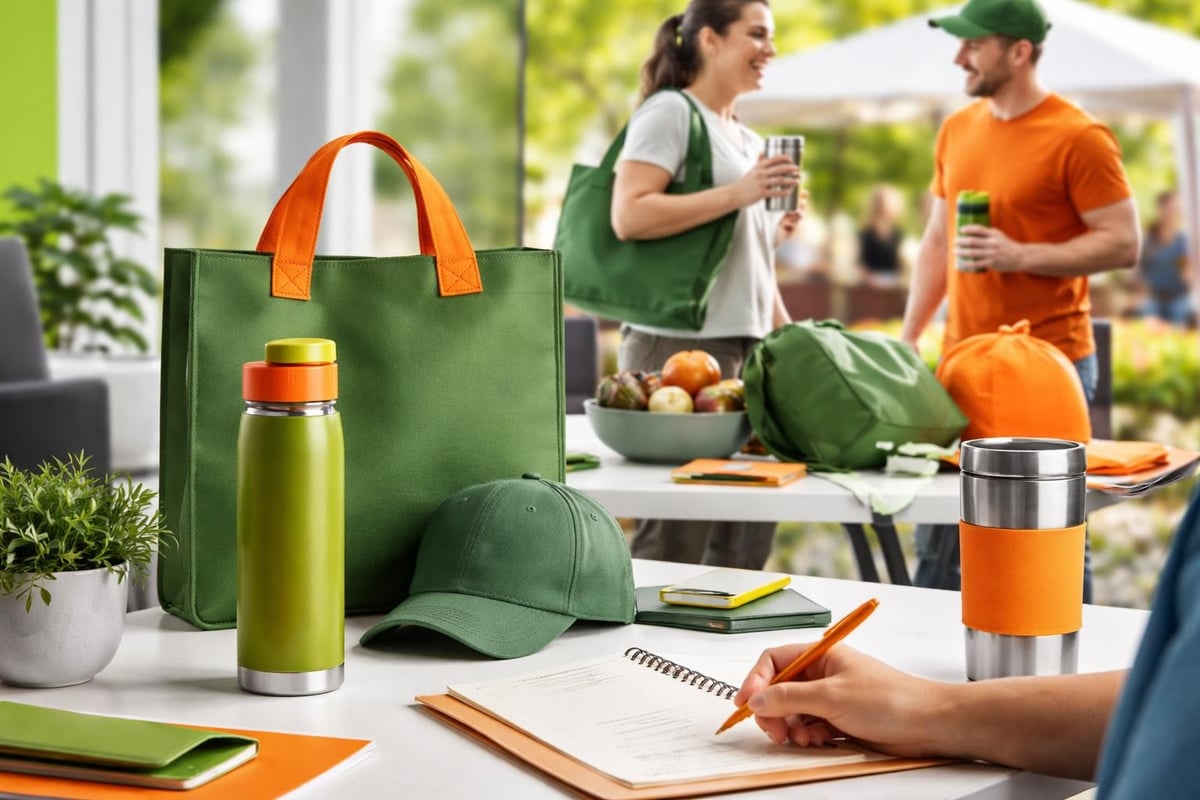
Choosing the Right Promotional Merchandise Items for Your Audience
Understanding Your Target Market
Your promotional strategy succeeds or fails based on how well you know your recipients. A tech startup's employees won't respond to the same items that resonate with construction company staff or healthcare professionals.
Start with these fundamental questions:
- What does your audience's typical day look like?
- Which items would genuinely improve their work or personal life?
- Where do they spend most of their time (office, remote, travel, outdoors)?
- What values matter most to them (sustainability, innovation, practicality)?
Demographics tell only part of the story. Dig deeper into psychographics and lifestyle factors. The promotional merchandise trends for 2026 emphasise personalisation and relevance over mass distribution of generic items.
Matching Products to Marketing Objectives
Different promotional merchandise items serve different strategic purposes. A clear objective guides your selection process and improves campaign effectiveness.
| Objective | Recommended Items | Why They Work |
|---|---|---|
| Brand Awareness | Apparel, bags, drinkware | High visibility in public spaces |
| Lead Generation | Tech accessories, office supplies | Professional utility encourages retention |
| Customer Retention | Premium gifts, personalised items | Shows appreciation and strengthens relationships |
| Event Marketing | Lanyards, notebooks, pens | Immediate utility during the event |
Consider your budget alongside your goals. Quality always trumps quantity when it comes to promotional merchandise items. One well-made product that people use for years delivers better ROI than dozens of cheap items that end up in bins.
Most Effective Promotional Merchandise Items Categories
Apparel That People Actually Wear
Branded clothing represents mobile billboards, but only if recipients choose to wear them. The secret lies in selecting styles and quality levels that match or exceed what people would buy themselves.
Quality matters immensely in apparel. According to a guide to designing promotional apparel, the most successful branded clothing items are those customers would genuinely choose to wear, independent of the logo.
Focus on versatile basics rather than trendy pieces. Classic polo shirts, comfortable hoodies, and professional jackets have staying power. They remain in rotation for years, continuously promoting your brand to new audiences.
The branding approach affects wearability too. Subtle, tasteful logo placement often performs better than large, prominent designs. People appreciate quality items that happen to feature your brand rather than walking advertisements.
Drinkware and Office Essentials
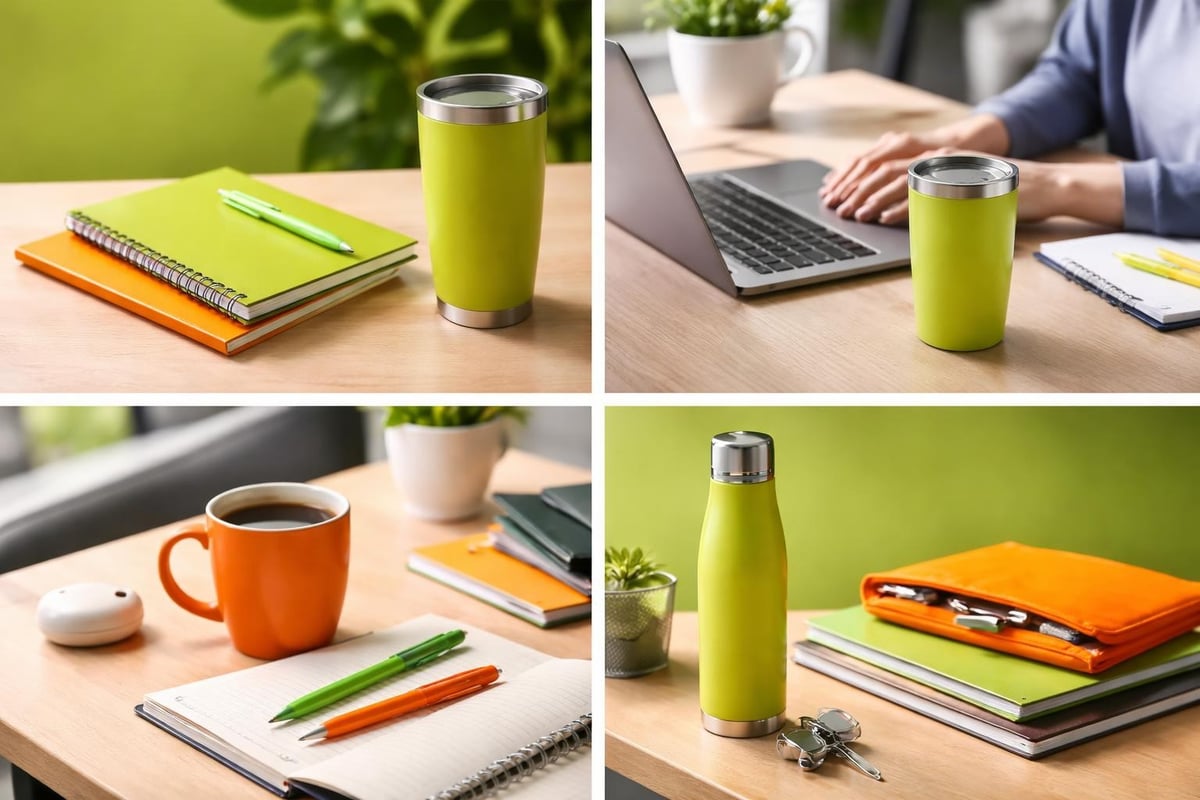
Reusable bottles, coffee mugs, and desk accessories enjoy exceptional longevity amongst promotional merchandise items. They occupy prime real estate in daily routines, generating thousands of impressions over their lifetime.
Office workers particularly value functional desk items. Quality pens, branded notebooks, and desk organisers get used repeatedly. When you're exploring branded office products, consider how each item integrates into workspace workflows.
The sustainability angle strengthens drinkware's appeal. As businesses and individuals reduce single-use plastics, a quality reusable bottle or coffee cup aligns with environmental values whilst promoting your brand.
Tech Accessories and Modern Essentials
In our digitally connected world, tech-related promotional merchandise items serve constant needs. Phone accessories, USB drives, cable organisers, and screen cleaners accompany people throughout their day.
These items work particularly well for:
- Trade show giveaways where attendees need to stay connected
- Corporate gifts for remote workers setting up home offices
- Client appreciation gifts that demonstrate understanding of modern work
- Event swag that serves immediate utility
Consider the longevity of tech items carefully. Rapidly changing technology can date some products quickly, whilst universal accessories like charging cables and phone stands remain relevant for years.
Bags and Carrying Solutions
Tote bags, backpacks, and laptop cases turn recipients into brand ambassadors. Every commute, shopping trip, or business meeting becomes a branding opportunity.
The versatility of bags ensures broad appeal across demographics. From students to executives, everyone needs to carry items. Quality bags also signal your brand's commitment to durability and practicality.
When selecting promotional bags, fabric quality and construction details separate throwaway items from cherished everyday companions. Reinforced stitching, comfortable straps, and practical pocket configurations matter.
Strategic Distribution of Promotional Merchandise Items
Trade Shows and Events
Events concentrate your target audience in one location, making them ideal for distributing promotional merchandise items. However, promotional products for events require careful planning to maximise impact.
Weight and portability become critical factors. Attendees carry items throughout the event and often travel afterwards. Lightweight, packable items work better than bulky products, regardless of perceived value.
Create tiers of promotional merchandise items for events:
- Entry-level items for booth visitors (pens, stickers, small notebooks)
- Mid-tier products for qualified leads (drinkware, tech accessories)
- Premium gifts for priority prospects and existing clients (apparel, quality bags)
Timing your distribution strategically also matters. Giving premium items early builds goodwill, whilst saving them for the event's end ensures only genuinely interested prospects carry them home.
Employee Welcome Kits and Recognition
Internal audiences deserve the same strategic thinking as external ones. Employee promotional merchandise items strengthen culture, improve retention, and turn staff into brand advocates.
Welcome kits for new hires might include:
- Quality branded apparel in their preferred sizes
- Desk essentials and office supplies
- Drinkware and personal items
- Welcome letter explaining your brand story
Recognition programmes benefit from thoughtful promotional items too. Anniversary gifts, achievement awards, and milestone celebrations become more meaningful with quality branded merchandise that acknowledges individual contributions.
Direct Mail and Customer Appreciation
Sending promotional merchandise items directly to customers, prospects, or partners creates memorable touchpoints in increasingly digital communication. The surprise factor of receiving a physical gift generates positive emotional responses that emails can't replicate.
Consider the unboxing experience. Presentation matters as much as the product itself. Quality packaging, personalised notes, and thoughtful item selection demonstrate care and attention that recipients notice and appreciate.
Common Mistakes to Avoid With Promotional Merchandise Items
Prioritising Price Over Quality
The temptation to maximise quantity by minimising per-unit cost undermines your entire campaign. Cheap promotional merchandise items communicate that your brand values cost-cutting over quality, precisely the opposite message most businesses want to send.
Research shows that common mistakes when ordering promotional products often stem from focusing exclusively on price rather than value and recipient experience.
Calculate true cost-per-impression rather than cost-per-item. A quality product used for years delivers exponentially more value than a cheap alternative discarded within weeks.
| Quality Level | Initial Cost | Lifespan | Impressions | Cost Per 1000 Impressions |
|---|---|---|---|---|
| Budget Item | £2.00 | 1 month | 300 | £6.67 |
| Quality Item | £8.00 | 2 years | 7,200 | £1.11 |
Ignoring Lead Times and Production Schedules
Rushing promotional merchandise items rarely produces good results. Quality customisation requires adequate production time, and last-minute orders often force compromises on quality, options, or both.
Plan your promotional product campaigns with realistic timelines:
- Strategy and selection phase: 2-3 weeks
- Quote and approval process: 1-2 weeks
- Production time: 2-6 weeks depending on item and customisation
- Shipping and quality checking: 1-2 weeks
Build buffer time into every stage. Unexpected delays happen, and cushion prevents panic-driven decisions that compromise your campaign.
Neglecting Brand Consistency
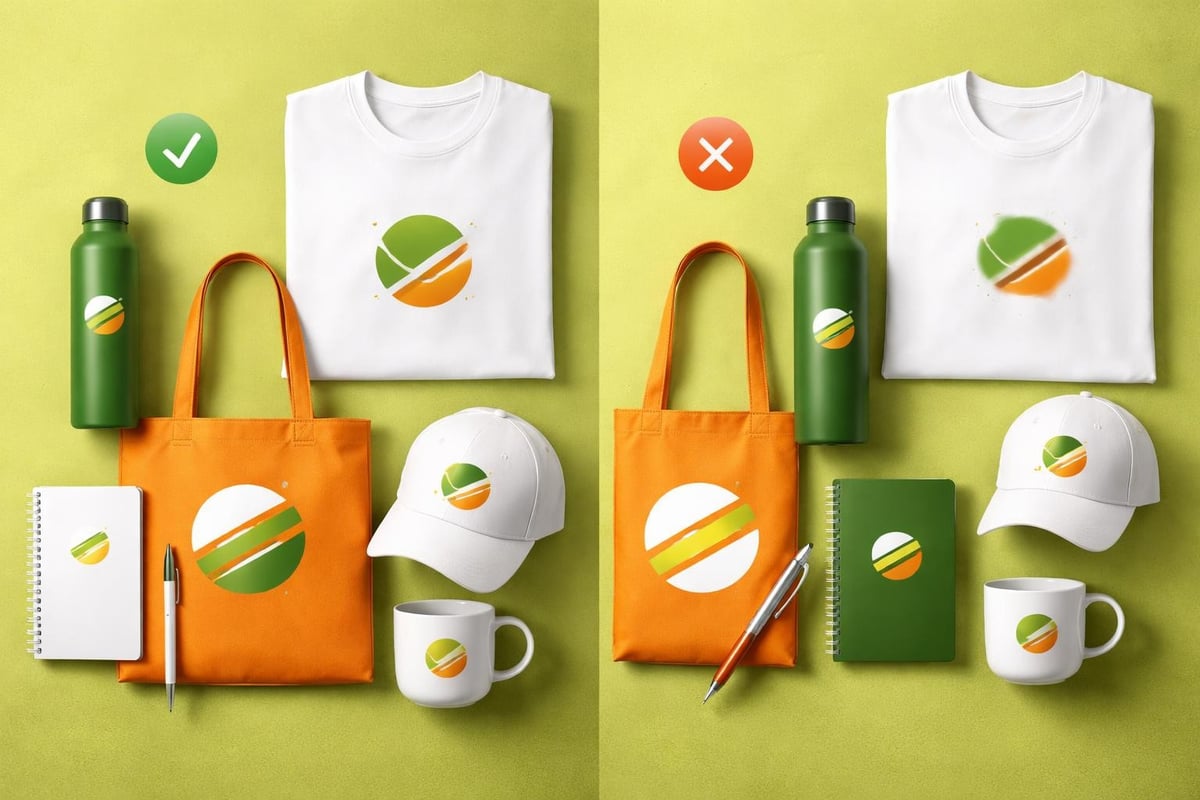
Your promotional merchandise items should reinforce your brand identity, not confuse it. Inconsistent logos, incorrect colours, or off-brand messaging dilute your marketing effectiveness.
Best practices for ordering promotional items emphasise maintaining brand standards across all promotional products. Create clear brand guidelines that specify acceptable logo treatments, colour specifications, and messaging frameworks.
Work with suppliers who understand brand consistency. Request digital proofs before production, and don't approve items that deviate from your standards, regardless of timeline pressure.
Measuring the Impact of Promotional Merchandise Items
Tracking Methods and Metrics
Unlike digital campaigns with built-in analytics, measuring promotional merchandise items requires creative tracking approaches. However, attribution is possible with the right systems.
Direct tracking methods include:
- Unique URLs or QR codes printed on items
- Promotional codes specific to merchandise campaigns
- Survey questions asking how recipients learned about your company
- Event-specific items tied to registration or follow-up activities
Indirect indicators provide valuable insights too. Watch for correlation between merchandise distribution and website traffic spikes, social media engagement, or sales inquiries from target audiences.
Calculating Return on Investment
ROI for promotional merchandise items extends beyond immediate sales. Consider these value dimensions:
- Brand awareness: Impressions generated over the product's lifetime
- Customer acquisition cost reduction: Lower CAC when merchandise supports other channels
- Customer lifetime value: Increased retention from appreciation and loyalty programmes
- Brand preference: Improved positioning versus competitors in recipient minds
The promotional products industry reached record sales levels precisely because businesses recognise these multifaceted returns.
Compare your promotional merchandise investment against other marketing channels. Factor in production costs, distribution expenses, and campaign management time, then evaluate against awareness, engagement, and conversion metrics.
Sustainability and Promotional Merchandise Items in 2026
Eco-Conscious Product Selection
Modern consumers, particularly in Canada, expect environmental responsibility from brands. Your promotional merchandise items should reflect this awareness through sustainable materials and ethical production.
Popular eco-friendly options include:
- Recycled polyester apparel
- Bamboo or wheat straw office products
- Reusable alternatives to single-use items
- Products certified by environmental standards organisations
Eco-friendly merchandise doesn't mean compromising on quality or impact. Many sustainable promotional merchandise items offer superior durability and performance compared to conventional alternatives.
Communicating Your Sustainability Story
The environmental benefits of your promotional merchandise items deserve highlighting. When giving reusable bottles or recycled notebooks, explain the positive impact these choices represent.
Include information cards with eco-friendly promotional products that outline:
- Materials used and their environmental advantages
- Estimated single-use items replaced over the product's lifetime
- Your company's broader sustainability commitments
- Proper end-of-life disposal or recycling instructions
This education transforms promotional merchandise items from simple giveaways into statements about shared values between your brand and recipients.
Working With Promotional Merchandise Suppliers
Selecting the Right Partner
Your supplier relationship significantly impacts campaign success. The right partner brings expertise, reliability, and creativity to your promotional merchandise items strategy.
Evaluate potential suppliers on these criteria:
- Product range and customisation capabilities
- Quality standards and samples
- Customer service responsiveness
- Production timelines and reliability
- Pricing transparency and value
- Design support and creative input
Canadian businesses benefit from working with local suppliers who understand regional preferences, handle logistics efficiently, and provide personalised service. Geography matters when managing timelines and addressing issues quickly.
The Design and Approval Process
Collaboration with your supplier ensures promotional merchandise items accurately represent your brand. The design phase transforms concepts into production-ready specifications.
Request detailed mockups showing exact logo placement, colours, and sizing. Digital proofs help, but physical samples for significant orders provide the most accurate preview of final products.
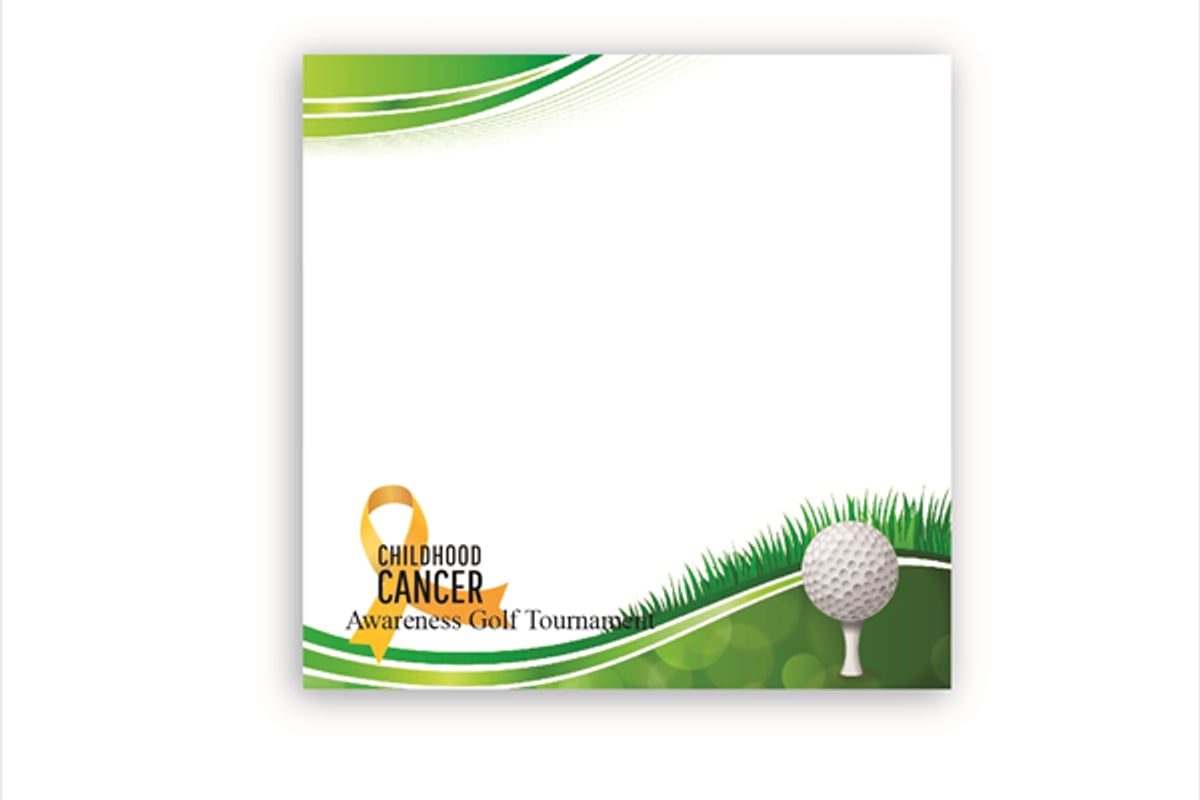
Don't skip the approval stage, even under time pressure. Correcting mistakes after production costs far more than investing extra days ensuring accuracy beforehand. When you need items that make an immediate impression, products like Post-it® Custom Printed Notes offer vibrant full-colour printing on premium adhesive paper that elevates brand visibility whilst delivering genuine utility in offices and events.
Managing Budgets and Bulk Orders
Promotional merchandise items often involve significant upfront investment, particularly for quality products ordered in quantity. Strategic budget management ensures you maximise value without overspending.
Volume discounts reward larger orders, but consider:
- Storage requirements for bulk inventory
- Product obsolescence if your branding changes
- Cash flow implications of large purchases
- Potential waste if items don't resonate with recipients
Sometimes ordering smaller quantities of multiple product types serves your strategy better than bulk ordering a single item, even if per-unit costs increase slightly. Variety prevents promotional fatigue and allows testing different approaches.
Building Long-Term Promotional Merchandise Strategies
Creating Cohesive Campaigns
Individual promotional merchandise items work harder when they're part of integrated campaigns. Coordinate your branded products with other marketing channels for amplified impact.
A product launch campaign might include:
- Social media teasers featuring your new promotional items
- Email announcements explaining the campaign and how to receive items
- In-person distribution at launch events
- Follow-up content showcasing items in use
- User-generated content campaigns encouraging recipients to share photos
This integration transforms promotional merchandise items from standalone tactics into strategic campaign elements that reinforce messages across touchpoints.
Seasonal and Recurring Programmes
Establishing predictable promotional merchandise calendars creates anticipation and strengthens brand relationships. Annual traditions around specific items build emotional connections that transcend transactional relationships.
Consider programmes like:
- Anniversary gifts for customers reaching milestones
- Seasonal items aligned with holidays or weather changes
- Back-to-school promotions with educational supplies
- Year-end appreciation packages for top clients
- Welcome kits for new customers or partners
Consistency in these programmes signals commitment and reliability whilst providing regular touchpoints that keep your brand top-of-mind throughout the year. Understanding the best practices for promotional product campaigns helps you build sustainable strategies that deliver results over time.
Industry Trends Shaping Promotional Merchandise Items
Personalisation and Customisation
Generic promotional merchandise items increasingly give way to personalised products that acknowledge individual recipients. Technology makes customisation more accessible and affordable, enabling strategies that weren't feasible years ago.
Personalisation options include:
- Individual names or initials on products
- Customised colours matching recipient preferences
- Role-specific or department-specific items
- Products chosen by recipients from curated selections
This approach improves perceived value and usage rates. People form stronger attachments to items that feel uniquely theirs rather than mass-produced giveaways.
Technology Integration
Smart promotional merchandise items incorporate technology that extends functionality beyond physical utility. NFC chips, QR codes, and digital integrations create bridges between physical products and digital experiences.
Examples include:
- Business cards with embedded NFC chips linking to digital profiles
- Notebooks with companion apps for digitising handwritten notes
- Bottles with hydration tracking capabilities
- Bags with integrated charging solutions
These innovations position your brand as forward-thinking whilst providing genuinely useful features that recipients value. The global promotional products market shows continued growth driven partly by these technological enhancements.
Experience-Based Promotional Items
Beyond physical products, some organisations incorporate experience elements into promotional strategies. This might include event access, exclusive workshops, or membership programmes bundled with tangible promotional merchandise items.
The combination creates memorable moments that strengthen emotional connections whilst providing physical reminders of those experiences. A branded backpack becomes more meaningful when it's connected to a wilderness leadership retreat or industry conference your company sponsored.
Sector-Specific Applications
B2B Promotional Merchandise
Business-to-business contexts require different approaches than consumer campaigns. Professional settings demand subtle branding, premium quality, and clear utility that justifies desk or office space.
Successful B2B promotional merchandise items include:
- Executive gifts for decision-makers
- Office supplies for daily use
- Technology accessories for modern work
- Apparel appropriate for professional environments
The guide to choosing promotional products provides frameworks for selecting items that resonate in corporate contexts whilst maintaining brand visibility.
Retail and Consumer Promotions
Consumer-facing promotional merchandise items often emphasise brand personality, visual appeal, and lifestyle alignment over pure utility. These items become fashion statements or personal expression tools that recipients choose to display.
Consider promotional products that:
- Align with lifestyle aspirations and values
- Offer Instagram-worthy visual appeal
- Support hobbies and personal interests
- Demonstrate brand personality through design
The emotional connection matters more than functional utility in many consumer contexts. Items that recipients proudly display or use publicly deliver exponential visibility compared to those tucked in drawers.
Non-Profit and Community Organisations
Charitable organisations and community groups use promotional merchandise items to build supporter identity, fundraise, and spread awareness about causes. These contexts emphasise emotional resonance and values alignment.
Effective approaches include:
- Merchandise sales that directly fund programmes
- Supporter recognition items for donors and volunteers
- Awareness-building products that spark conversations
- Event items that create community belonging
Quality remains important even with budget constraints. Supporters judge organisational stewardship partly through the thoughtfulness of promotional items, making strategic selection crucial. Resources on branded promotional merchandise as a cost-effective strategy offer insights applicable to non-profit contexts.
Promotional merchandise items continue proving their worth in 2026's marketing landscape by offering tangible value that digital campaigns can't replicate. Success comes from strategic selection, quality focus, and alignment with recipient needs rather than simply distributing branded items indiscriminately. Whether you're planning your first promotional campaign or refining existing programmes, The Promo Hut brings expertise in branded merchandise across Canada, helping businesses select promotional merchandise items that genuinely connect with audiences and deliver measurable marketing impact.